

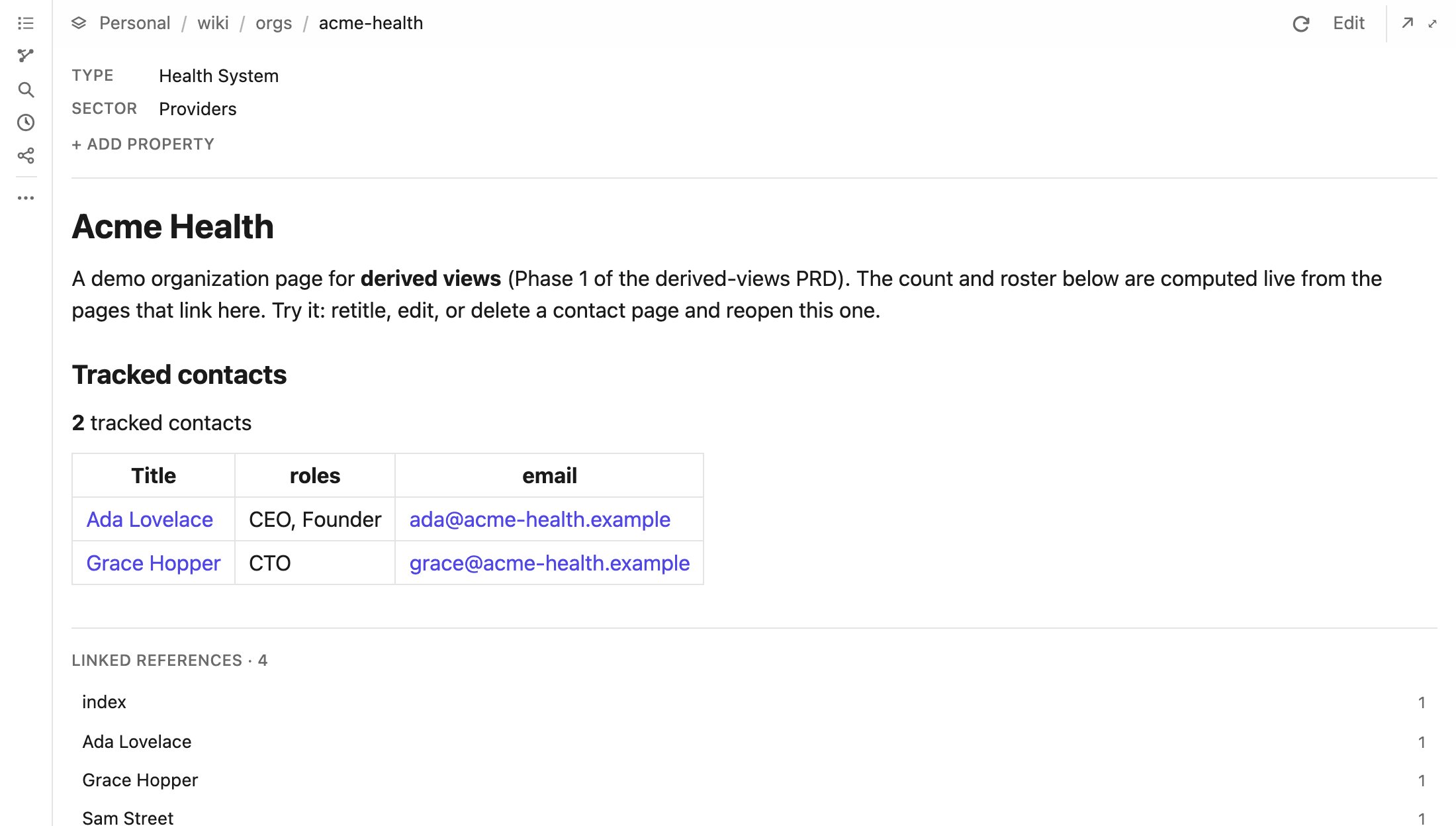
The page viewer: frontmatter as properties, a computed table, and linked references below.
Opening it in a browser
Every page has a web address,https://<server>/b/<owner>/<repo>/<path>, that anyone with access
to the brain can open. They sign in with the same email link and need no Claude account. Ask
Claude to share a page and it gives you the link. Locally, pnpm try serves the app at
http://127.0.0.1:8788/b/local/<folder>.
What is in it
- Viewer. Rendered markdown with working links in both styles. Frontmatter appears as a properties panel. Computed views render live, and every page ends with the pages that link to it. A refresh control shows the page’s age and says when it changed underneath you.
- File tree. Clicking a folder opens its folder note. A folder without one offers to create it, already holding a listing of the folder.
- Search, with ranked results and the lines that matched.
- Link graph, with pages sized by how many links touch them and colored by folder.
- Activity: who changed what, and when, for the brain or for one page.
- Brain switcher, when you can reach more than one brain.
- Sharing, members and analytics, each shown only to people whose role can use them.
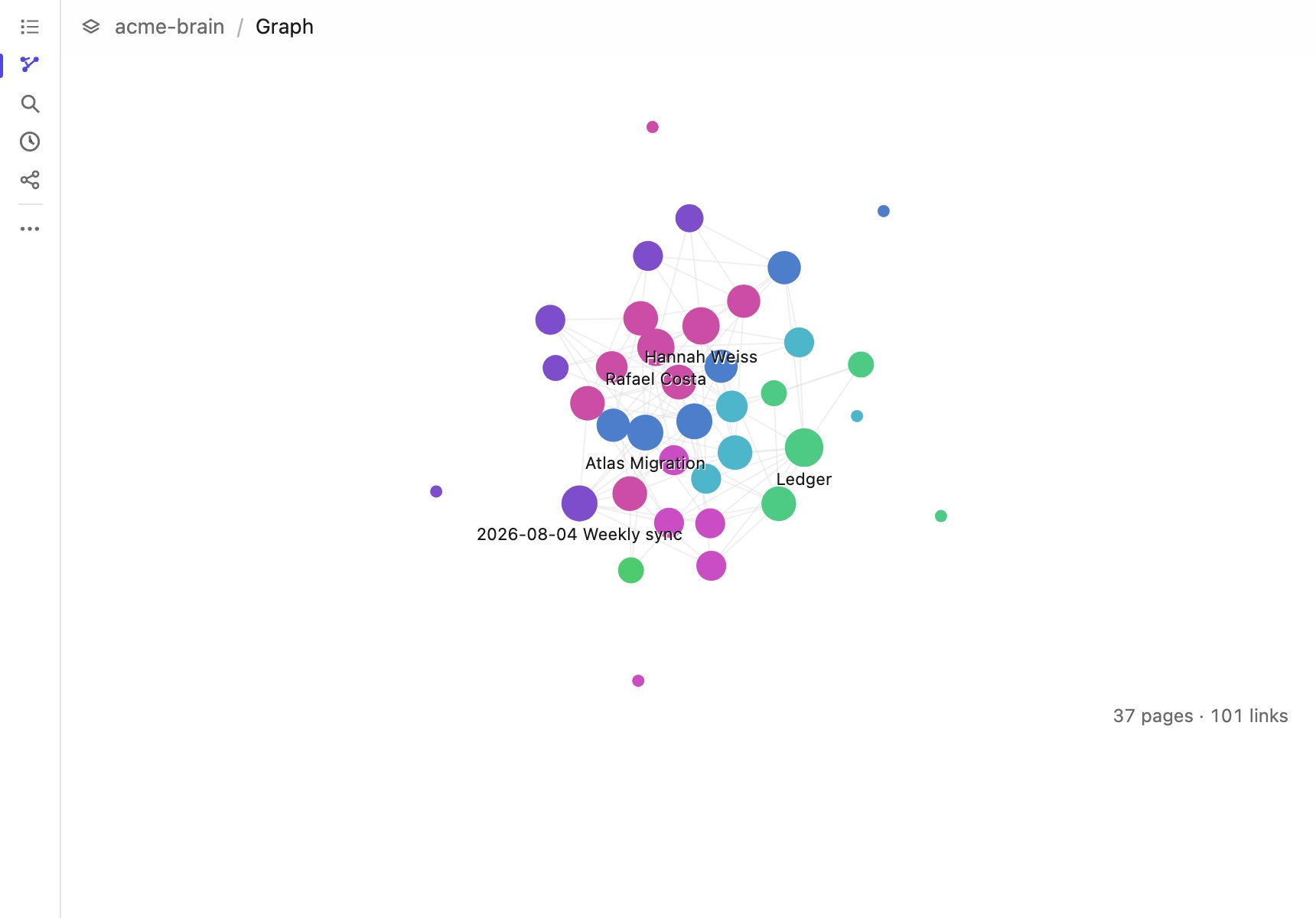
The link graph over a 37-page brain.
The editor
A rich-text editor that saves the markdown you would have written by hand. That is the whole design constraint: a brain is read on github.com, in Obsidian and by agents, so an editor that reformatted every page it touched would make every change unreadable.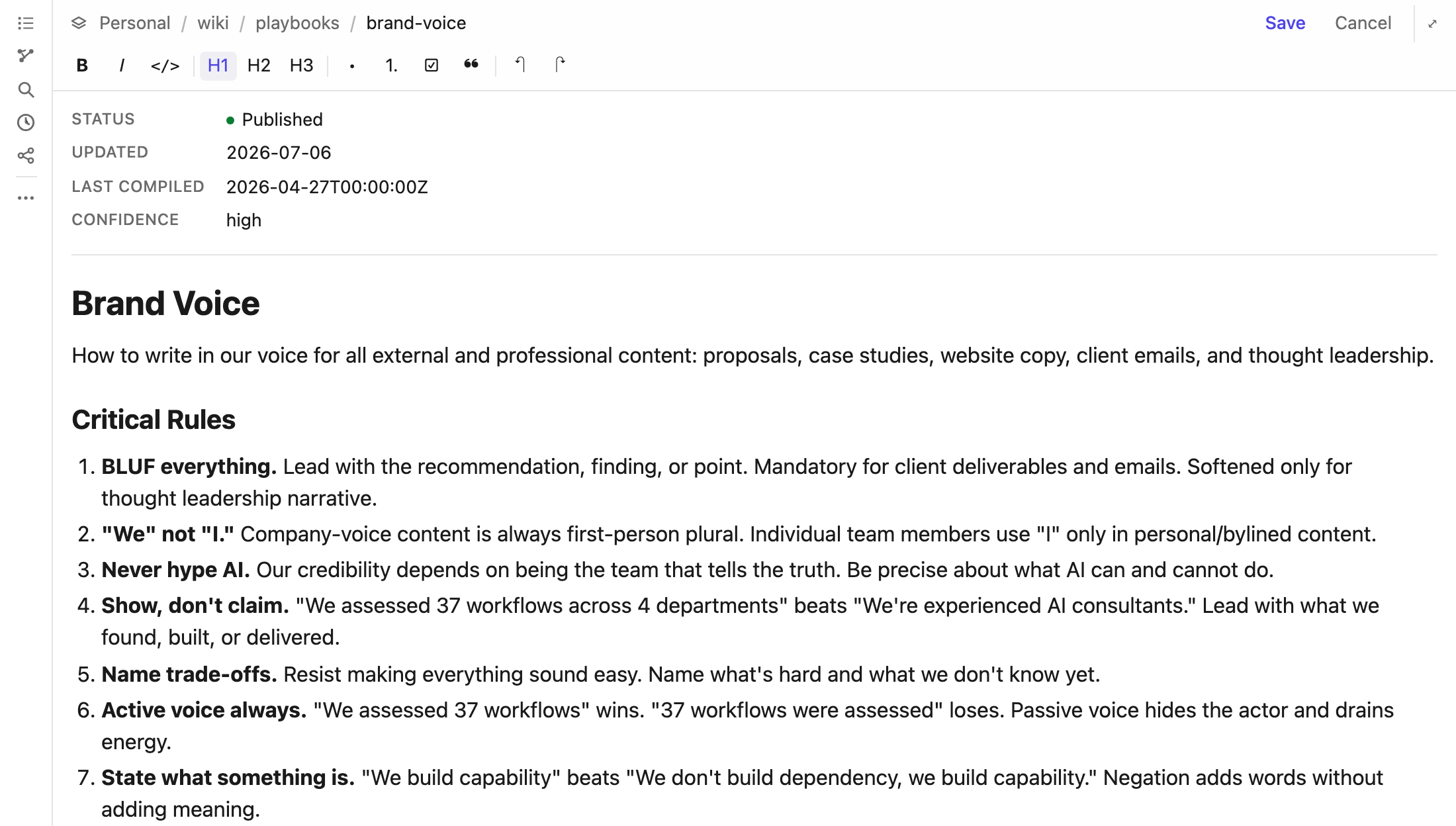
The editor: a formatting toolbar, the page's properties, and the body as rich text, saved back as plain markdown.
- Formatting: headings, bold, italic, inline code, bulleted, numbered and checklist items, quotes, and tables with resizable columns. Undo and redo with the usual shortcuts.
- Properties are edited in their own panel and saved with the body.
- Images: paste or drop a file. It is stored in the brain beside the page and embedded as a normal image link. Saving waits for the upload, so a page never links to a missing file.
- Faithful saves. Wikilinks, list markers and tables come back exactly as written, and frontmatter the editor does not show is never touched.
- No lost work. If someone else changed the page after you opened it, the save is refused and your text stays on screen instead of overwriting theirs. On a protected branch, a save goes into the brain’s open pull request (or opens one), and the editor says so.